


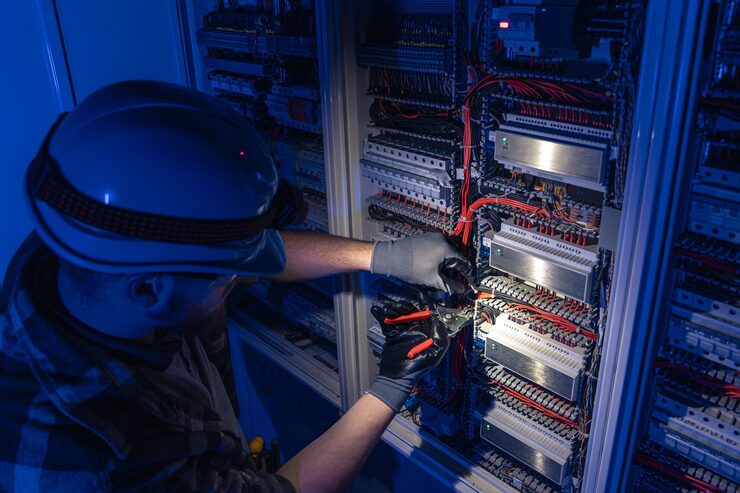
Large-scale infrastructure projects move fast once they get going. Contractors are scheduling subcontractors, equipment deliveries are being tracked, and timelines are under constant pressure from weather, supply chains, and ownership expectations. In that environment, the last thing anyone needs is a switchgear distributor who cannot deliver the right equipment, on time, to the right specification. Yet this is precisely where many projects run into problems that could have been avoided with a better procurement partner.
The Scope of Switchgear in Commercial and Industrial Projects
In any significant commercial or industrial facility, switchgear sits at the core of the entire electrical system. It receives power from the utility or generation source, distributes it safely throughout the building, and provides the protection and isolation capability that keeps people and equipment safe. For tribal governments, healthcare facilities, casinos, and manufacturing plants, the switchgear specification determines the safety profile and operational flexibility of the entire facility.
Getting that specification right requires more than reading a catalog. It requires understanding the facility’s load profile, the utility service characteristics, the available fault current, and the protection coordination requirements that prevent a single fault from cascading into a whole-facility outage. These are engineering-level decisions that benefit from a distributor who brings technical knowledge to the table alongside product access.
Key Switchgear Decision Points for Project Engineers and Contractors
- Service entrance equipment: Must match utility service voltage and available fault current
- Main distribution panel configuration: Should reflect the facility’s load distribution and future expansion potential
- Protection coordination: Breaker settings must be coordinated to isolate faults at the lowest level possible
- Arc flash mitigation: Modern switchgear increasingly incorporates arc flash reduction features that protect maintenance personnel
- Physical space and environmental rating: Equipment must fit available space and match the installation environment
How Commercial Lighting Fits Into the Same Infrastructure Framework
While switchgear handles power distribution, commercial lighting represents a significant portion of the electrical load in most commercial and tribal facilities. Planning these two systems together, rather than in separate silos, produces better outcomes for the overall facility. Load calculations for switchgear sizing should include the full lighting load, and lighting control systems need to be compatible with the building’s electrical distribution architecture.
For projects that include both electrical infrastructure and lighting scope, working with a single partner who handles both eliminates the communication gaps between trades. Catawba Power and Lighting is positioned exactly for that role, offering a comprehensive product portfolio that spans switchgear and commercial lighting systems for facilities of every scale.
Industries That Depend on Getting Switchgear Right
- Tribal governments and casinos: Complex load profiles with life-safety and revenue-critical systems
- Healthcare facilities: Strict code requirements for essential electrical systems and equipment branch circuits
- Manufacturing plants: High-demand motor loads and continuous operation requirements
- Commercial construction: New builds requiring complete electrical infrastructure from service entrance to distribution
The Native Procurement Advantage in Switchgear Sourcing

Switchgear procurement for tribal government projects and federally funded construction often involves supplier diversity requirements that standard distributors cannot fulfill. Catawba Power and Lighting’s status as a Native American-owned business provides tribal preference procurement advantages that help partners meet those diversity objectives without compromising on equipment quality or technical support.
The company’s strategic manufacturer relationships cover the leading names in commercial and industrial switchgear, which means specifications written by project engineers can be fulfilled with the intended equipment rather than substituted with lesser alternatives. That alignment between specification and supply chain is one of the most important things a procurement partner can provide on a major project.
Conclusion
Switchgear distribution for large-scale commercial and tribal projects demands more than a vendor who can fulfill a purchase order. It requires a partner with the technical knowledge to support specification decisions, the manufacturer relationships to source the right equipment competitively, and the logistics capability to deliver on timeline. Catawba Power and Lighting brings all of those qualities to every project, backed by Native-owned procurement advantages that serve both diversity goals and long-term infrastructure objectives.