


There’s a question worth asking about the objects you surround yourself with daily: do they tell a story about who you are, or do they simply exist? Most consumer objects exist. They perform their function and then disappear into the visual background of daily life, noticed only when they fail at their primary purpose. The Global Wanderer was founded on a different principle: that everyday objects have the potential to carry real cultural stories, to connect the person who uses them to the breadth of human creative heritage, and to make ordinary moments feel connected to something larger than themselves.
This principle, which the brand calls bringing global heritage to life in a fresh, modern way, runs through every product in their catalog. Phone cases. MacBook cases. AirPods covers. Watch bands. Kindle cases. Tote bags. Tumblers. Hoodies. Pouches. Fanny packs. Each object category gets the same treatment: authentic cultural design research, thoughtful contemporary interpretation, and production quality that maintains design integrity through real-world use.
What Is “Global Heritage” and Why Does It Matter to The Global Wanderer?
Global heritage, as The Global Wanderer practices it, means the accumulated creative traditions of human cultures worldwide. It’s not a vague aesthetic category. It’s a specific commitment to drawing from identified craft traditions with real geographical and historical roots: the Kente weaving of Ghana’s Akan people, the Kilim carpet-making of Anatolia, the Shibori resist-dyeing of Japan, the Talavera ceramic tradition of Puebla, Mexico, the Suzani embroidery of Uzbekistan’s Silk Road cities, the Azulejo tilework of Portugal and the broader Iberian tradition.
Each of these traditions represents centuries of cultural knowledge, craft skill, and aesthetic refinement passed down through generations. Translating them into contemporary accessories isn’t appropriation when it’s done with genuine respect and contextual understanding. The Global Wanderer demonstrates this understanding through their cultural heritage blog content, which explores the history, significance, and craft techniques behind each collection in accessible, genuinely educational articles.
The global heritage commitment that defines the brand is ultimately about making culture accessible rather than keeping it locked away in museums or limited to geographic communities of origin. A person in Seattle wearing a phone case inspired by Indonesian Ikat weaving isn’t displacing Indonesian culture. They’re engaging with it, potentially learning about it, and carrying a small visual representation of its beauty into their daily life.
How Does The Global Wanderer’s Product Range Express Global Heritage?
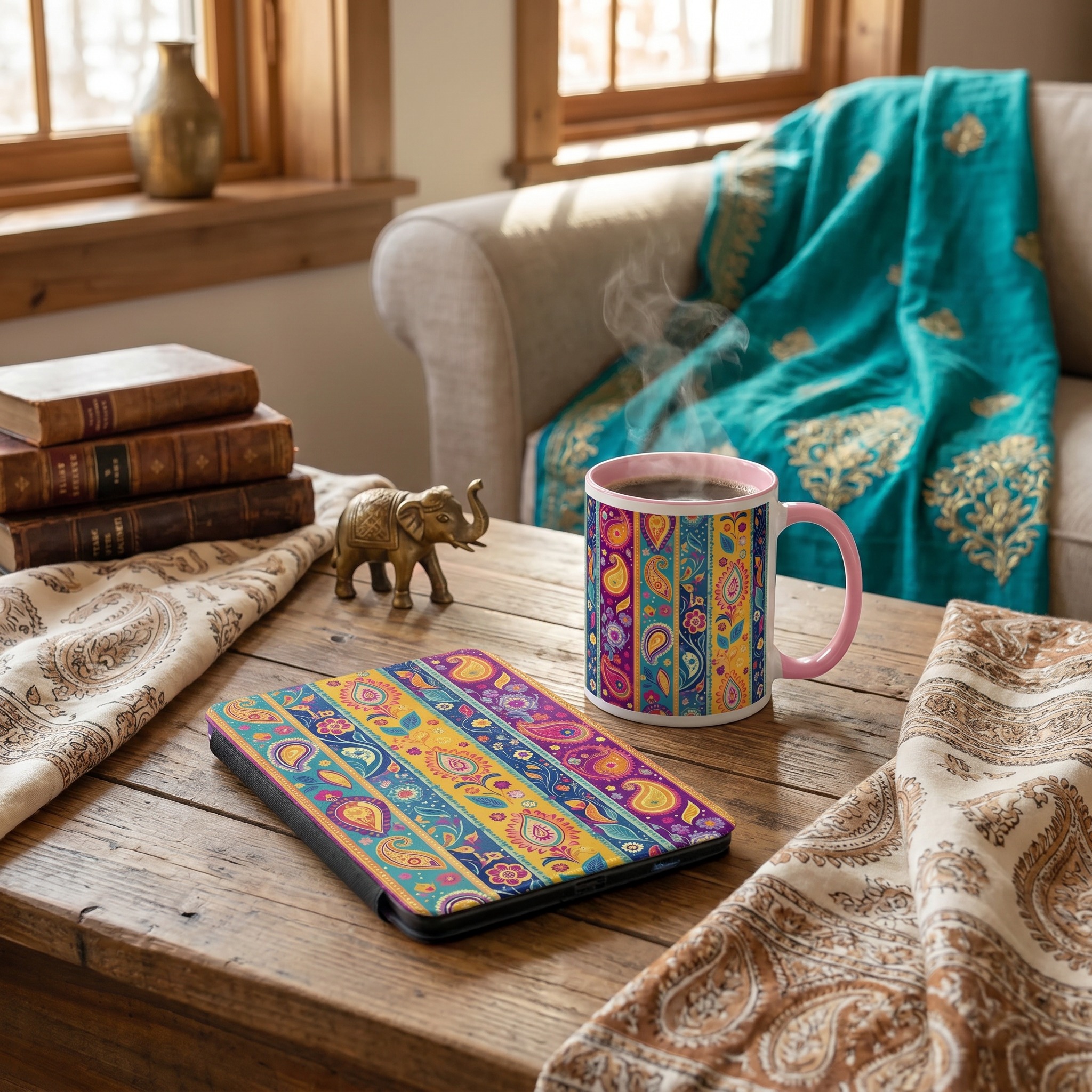
The range is genuinely impressive in its breadth. Tech accessories form the largest category, covering phones from the iPhone 17 series through older models, MacBook cases across multiple laptop sizes, AirPods cases for standard and Max models, Apple Watch bands in multiple width options, iPad cases, and Kindle cases in expanding sizes. Lifestyle accessories include tote bags, fanny packs, pouches, and drinkware. Apparel spans hoodies, sweatshirts, shirts, hats, and swimwear.
Across all of these categories, the same cultural design collections appear in coordinated form, enabling the kind of comprehensive cultural aesthetic building that passionate Global Wanderer customers describe as one of their favorite aspects of the brand. The Mexican Serape collection alone spans phone cases, MacBook cases, AirPods cases, watch bands, iPad cases, tumblers, tote bags, and apparel. Building a complete Serape aesthetic across your daily carry is entirely possible and genuinely stunning when assembled.
The By Country browsing navigation on The Global Wanderer’s website allows customers to explore all products from a specific cultural tradition in one view, which is a browsing experience designed specifically for the cultural curiosity that drives the brand’s community. Finding everything from Mexican culture, or everything from Japan, or everything from Ghana in one place makes the cultural depth of the catalog immediately visible.
Why Is Cultural Design More Meaningful Than Pure Aesthetic Design?
Pure aesthetic design, design that draws from no particular cultural tradition and simply creates patterns or visual interest for its own sake, has value. But it lacks the depth that cultural design provides. Cultural patterns carry historical resonance. They connect to stories about real people, real communities, real craft traditions developed over generations. When you understand the context behind a design, you experience it differently.
A Turkish Kilim pattern isn’t just geometric. It’s a visual language that Anatolian weavers used to encode regional identity, family history, and symbolic meaning into rugs that were central to home life and commercial exchange. A Ukrainian Vyshyvanka embroidery pattern isn’t just decorative. It’s a textile tradition so closely tied to national identity that wearing it has become a political as well as cultural act in contemporary Ukraine. Understanding these contexts makes the objects that carry these patterns more interesting and more meaningful to own and use.
The global heritage approach at The Global Wanderer provides this contextual depth through their cultural heritage blog, creating a path from product browsing to cultural education that rewards curious customers with real knowledge about the traditions they’re engaging with through their purchases.
What Community Has Built Around Global Heritage Accessories?
The Global Wanderer’s Instagram community is an active expression of the values that the brand cultivates. Customers share their coordinated cultural setups, their newly discovered favorite collections, and their personal connections to the cultural traditions represented in the product range. People of Mexican heritage carrying Serape-pattern accessories as expressions of cultural pride. Travelers celebrating the cultures of countries they’ve visited. Design lovers collecting across multiple cultural traditions for the aesthetic pleasure of building a diverse, globally inspired personal object collection.
This community dimension adds significant value to the brand beyond the individual product quality. Being part of a community of culturally curious, design-conscious people who share your values around global appreciation is itself a meaningful aspect of The Global Wanderer’s value proposition. The 10% discount for email subscribers is the entry point to this community. The cultural heritage blog content is its ongoing sustenance.
Conclusion
Global heritage is not a marketing concept at The Global Wanderer. It’s a genuine design philosophy, a curatorial commitment, and a community-building mission that transforms everyday objects into connections to the world’s creative richness. Whether you’re drawn to the bold energy of African textile traditions, the meditative elegance of Japanese craft, the vibrant festivity of Mexican folk art, or the geometric sophistication of Islamic geometric design, The Global Wanderer’s collection has something built specifically for your cultural orientation. Every object they make carries the world a little closer.
FAQ
Q: What does “global heritage” mean in The Global Wanderer’s design approach? A: It means drawing from specific, identified cultural craft traditions with real geographical and historical roots, representing them with authentic respect and contemporary design sensibility.
Q: How many cultural traditions does The Global Wanderer’s product range cover? A: The range covers dozens of traditions spanning Africa, Europe, Asia, the Pacific Islands, and the Americas, with each collection rooted in a specific regional craft heritage.
Q: What community has formed around The Global Wanderer’s global heritage products? A: An active Instagram community of culturally curious, design-conscious customers who share their coordinated setups, cultural discoveries, and personal connections to the traditions represented in the brand’s collections.

