


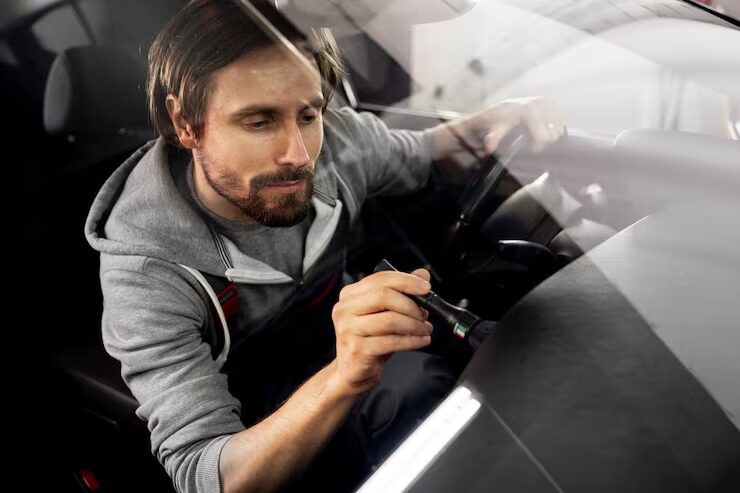
Nobody talks about automotive window tint the way they should. It gets lumped in with regular tint, priced higher, and then dismissed as a luxury. But if you’ve ever sat in a car with quality ceramic film on a ninety-degree day, you know it’s not the same product at all.
The difference isn’t just marketing copy. It’s measurable in temperature, in glare reduction, in how long the film actually lasts — and in what it does for the resale value of the vehicle over time.

Heat Rejection Is the Feature That Changes Daily Life
Standard window film works by blocking visible light. Ceramic tint blocks infrared radiation — the invisible heat energy that makes your car feel like an oven after sitting in the sun for an hour. Those are two different mechanisms, and the practical effect is significant.
What This Means on a Hot Day
Interior temperatures in a parked car can exceed 130°F. Ceramic tint reduces that meaningfully. Not perfectly — it’s still going to get warm in there — but the difference between stepping into a ceramic-tinted car versus an untinted one (or one with basic dye film) is real and immediate.
Air Conditioning Works Less Hard
When your cabin is 20 to 30 degrees cooler at the start, your AC reaches a comfortable temperature faster and doesn’t have to cycle as aggressively to maintain it. Over time, that’s easier on your AC system and slightly better for fuel economy. Neither benefit is dramatic, but they add up.
Why the Longevity Argument Matters
Cheap tint fades. Anyone who’s bought a used car with old window film has seen it — the purple tinge, the bubbling edges, the peel-and-crack situation that makes windows look worse than no tint at all. Ceramic films don’t degrade the same way because they don’t rely on dyes that oxidize under UV exposure.
The Long-Term Value Calculation
A quality ceramic install might cost three to four times what basic film costs. But if it lasts twice as long and performs significantly better the whole time, the per-year cost starts looking reasonable. And because it doesn’t affect signal reception the way metallic films do, you’re not trading one problem for another.
UV Protection and Interior Preservation
Ceramic window tint blocks up to 99% of UV rays. That matters for your skin when you’re driving, but it matters just as much for your dashboard, your leather seats, and your headliner.
The Interior Degradation Problem
UV light causes materials to fade and crack. You see it most obviously on dashboards — that chalky, brittle surface that develops after years of sun exposure. Quality tint slows that process dramatically. Pair it with regular car paint touch up work on the exterior, and you’re doing serious protection work on the whole vehicle, not just one side of the glass.
Signal-Friendly Technology
One legitimate criticism of older metallic tints was the interference they caused with GPS and phone signals. Ceramic particles are non-conductive, which solves that problem entirely. Your navigation works normally. Your phone connects without issues. You’re not giving anything up for the thermal performance.
Electronic Compatibility Matters More Than It Used To
Modern cars have more wireless technology than ever — key fobs, toll passes, phone connectivity, blind spot sensors. Any interference with those systems is a real problem. Ceramic tint sidesteps all of it.
Finding the Right Installer
The film quality matters, but so does the installation. Bubbles, lifting edges, and uneven application are installer problems more often than product problems. Look for shops that show previous work, use quality brands, and offer warranties on both the film and the labor.
What Good Work Looks Like
Clean edges. No bubbles or debris under the film. Consistent color across all windows. The film should look like it belongs there, not like it was added as an afterthought. A good installer takes their time, and you can usually tell from how long they say the job will take.
Conclusion
Ceramic window tint earns its higher price through better heat rejection, longer lifespan, UV protection, and zero signal interference. It’s a practical upgrade that changes how a car feels to drive and how well its interior holds up over time. For anyone planning to keep their car for years — or protect its resale value — it’s the option that makes sense.